

News
News
Staying Resilient and Ready to Act!
Security, social responsibility and international cooperation: ICOM Germany is using MUTEC 2026 as a platform to discuss some of the most pressing issues facing museums today. In this interview, Executive Director Anastasia Ziegler discusses how museums are responding to cybercrime, climate-related risks and other threats that present new challenges for institutions around the world. She also explains why museums are especially important as spaces for dialogue, participation and social cohesion in increasingly polarised times, and how exchanging knowledge and experience can help strengthen their resilience.
Ms Ziegler, ICOM Germany is once again an important partner of MUTEC in 2026 and is using the fair for numerous activities, from its own conference programme and general assembly to a reception. What makes MUTEC such an important place for ICOM Germany to exchange ideas, and what impulses do you hope to send out to the museum community from Leipzig?
Every two years, MUTEC is a firmly established date in the calendar of the cultural and museum community. Professionals, associations and institutions come together in Leipzig to learn about current developments in museum and exhibition technology and, together with the neighbouring trade fair denkmal, to explore issues relating to heritage conservation and restoration.
At the same time, MUTEC provides a platform for discussing pressing challenges and developing shared positions. Topics such as security and resilience are just as important as growing international networks.
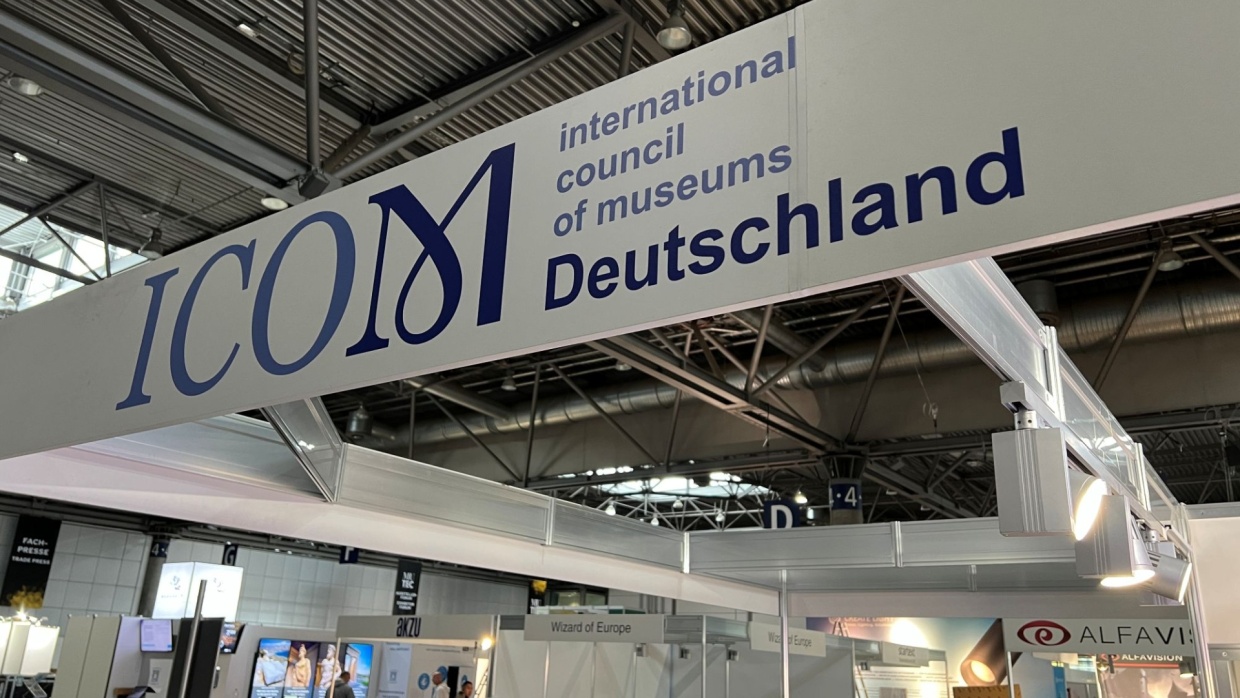
As Germany's largest museum association, we are part of a global network built on exchange and cooperation. We see ourselves as a bridge between local challenges and global developments. Meeting colleagues from museums, other associations and cultural institutions is therefore indispensable to our work.
We are delighted to continue our partnership with MUTEC in 2026 and to contribute to the international MUTEC Award. We are also working closely with the German Museums Association again this year, because effective advocacy is a collective effort.
ICOM's contribution to this year's MUTEC Forum focuses on “Museum Security in the Age of Cybercrime”. Cyberattacks such as ransomware attacks pose growing challenges for museums, libraries and archives, with potentially far-reaching and long-term consequences for institutions of all sizes. How has our understanding of security in the museum sector changed in recent years?
Our understanding of security has broadened considerably.
In addition to protecting people, buildings and collections, museums must now prepare for a wide range of threats, from natural disasters exacerbated by climate change and technical failures to vandalism and targeted attacks.
Digital security is becoming increasingly important. Cyberattacks can threaten not only data and IT systems but also disrupt the entire operation of a museum for a prolonged period.
Today, security therefore means taking physical and digital risks equally seriously, identifying potential threats early and implementing targeted preventive measures.
The key is to strengthen institutions' resilience so that they can continue to operate even under difficult circumstances.
We are very much looking forward to discussing this important subject with the experts at the MUTEC Forum. This highly topical discussion was initiated and curated by our board member Prof. Dr Stefan Simon, Director of the Rathgen Research Laboratory at the Staatliche Museen zu Berlin.
What other issues are currently concerning museums in Germany? Where do you see the greatest pressure for action?
Museum security, as already mentioned, is a central issue.
Beyond that, museums face numerous challenges, both nationally and internationally. Around the world, we are witnessing political shifts and increasing polarisation, a development also reflected in ICOM's annual theme, “Museums Uniting a Divided World”.
In Germany, too, questions are being raised about the role museums play in society and how they can safeguard their independence and freedom in exhibition-making, research and educational work.
At the same time, debates surrounding funding and financing are increasing the pressure on many institutions and limiting their room for manoeuvre.
As a museum association, we see it as our responsibility to follow these developments closely, take a stand and advocate for the interests and continued strengthening of museums.
Immediately after MUTEC, ICOM Germany will hold its annual conference in Jakarta in cooperation with ICOM CECA (International Committee for Education and Cultural Action). What common ground brings the international museum community together despite very different social, political and economic circumstances?
This year's annual conference is the result of an international collaboration.
Together with ICOM CECA, we are organising the conference in Jakarta from 10 to 14 November, immediately after MUTEC.
Under the title “Museums in Divided Times: How to Foster Dialogue, Care and a Sense of Belonging?”, we will explore how museums can help overcome social divisions and create genuine spaces for dialogue through inclusive and empathetic educational work.
ICOM's guiding principle, “Museums have no borders, they have a network”, provides the overarching framework.
We are delighted that numerous ICOM Germany members will contribute presentations, workshops and discussions.
We are particularly pleased about our cooperation with the Goethe-Institut Jakarta. On 13 November, we will organise a session to learn from Indonesian museum initiatives and projects and reflect on the role of museums and cultural diplomacy in an increasingly polarised world.
For those unable to attend in person, a free livestream of our session on 13 November will be available.
ICOM Poland will also be represented at MUTEC. What insights do you expect German museums to gain from their Polish colleagues in Leipzig this November?
International perspectives are always valuable because they allow us to question our own approaches and learn from the experiences of others.
We are therefore delighted that ICOM Poland will be participating in MUTEC.
It is particularly interesting that our Polish colleagues are also addressing security issues. In this field especially, different experiences and perspectives can provide valuable insights.
ICOM Germany is providing even greater support for the MUTEC Award this year. How can you tell whether an exhibition or museum project is not only well designed but genuinely sets new standards?
I am inspired by exhibitions that inform and move me, and in which I can recognise contemporary and critical connections to the present and possible futures.
The question of whether an exhibition or museum project can set new standards should, particularly in the context of the MUTEC Award, be put to the jury. Its members have assessed this year's submissions with a high level of professional expertise.
When you leave Leipziger Messe on Friday, 6 November, what would need to have happened at MUTEC for you to say: “If things go this way, we will emerge from these crises stronger”?
At the previous MUTEC, we discussed crises and learned that they can also offer opportunities to explore new approaches and develop solutions together.
That is precisely why we need dialogue, networking and a willingness to discuss different perspectives.
Listening, talking to one another, learning from each other and acting in solidarity – this is the path that ICOM Germany will continue to follow.